
Are AI Sports Picks Accurate? An Honest Answer
By Betty Sports · · 7 min read
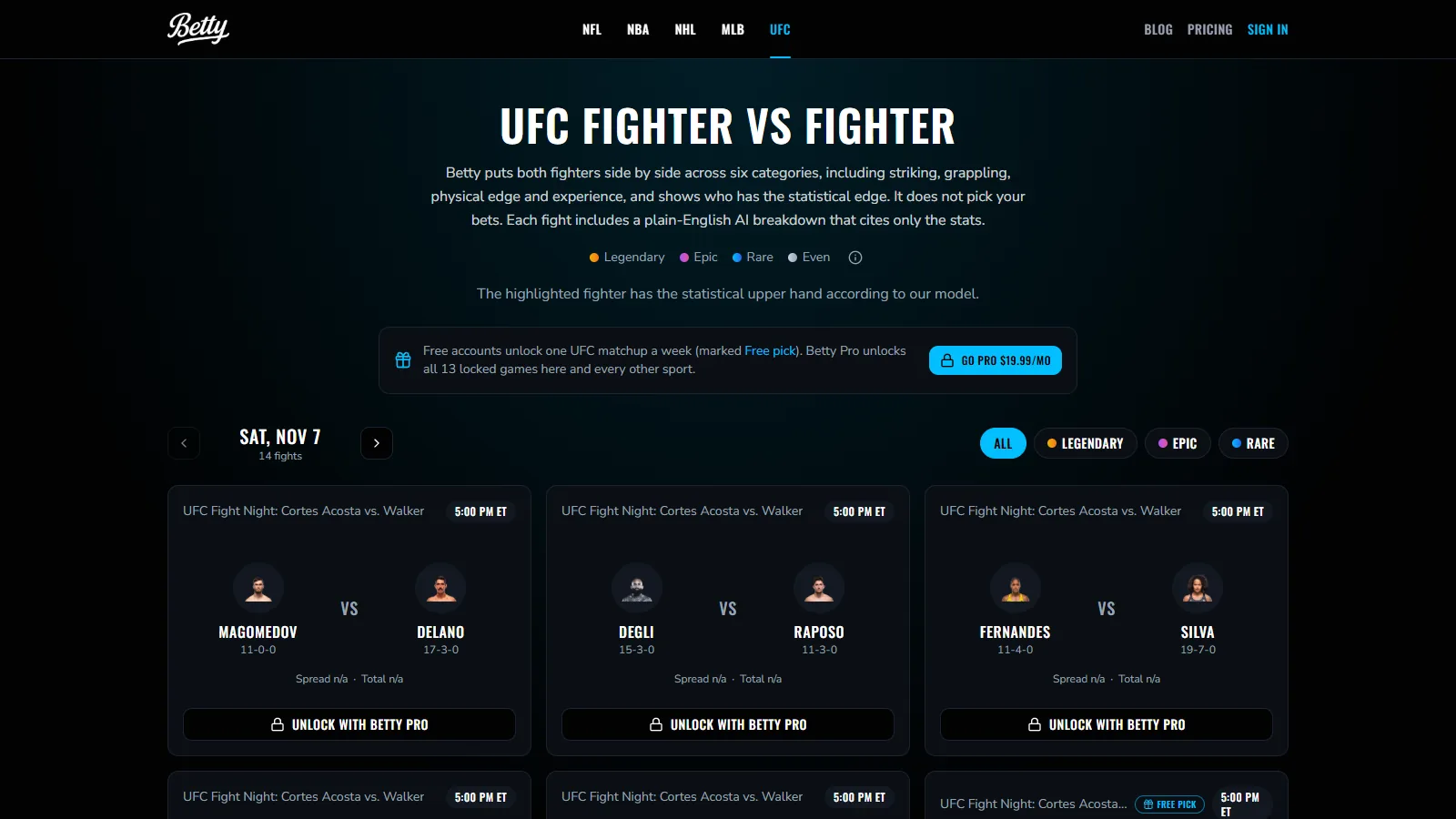
Sometimes. AI sports picks can be right often enough to look impressive over a short run, but no model can promise results, and any single accuracy number depends on how it was measured. The honest approach is to judge a tool by whether its reasoning is visible and its record is public.
We run an AI analysis product, so we have a stake in this question, and we would rather give you the straight version than a sales line. This post explains why accuracy is hard to measure in sports, how claims get inflated, and what to ask before you believe one. It will not give you a percentage, because we do not think a single number would be honest.
Why is accuracy so hard to pin down in sports?
Because sports are noisy and the sample you see is small. A coin that lands heads six times in a row has not become a better coin. A model that is right on a week of games has not necessarily found an edge either. Injuries, weather and chance push single results around in ways no stat can capture.
There is also a definitional problem. Accuracy depends on what is being predicted: straight winners, against the spread, or on totals. A tool can look strong by choosing the easiest category to report.
How do accuracy claims get inflated?
- Cherry-picked windows: reporting the best month and skipping the rest.
- Changed after the fact: calls edited, deleted or posted after the game started.
- Hidden denominators: a percentage with no count of how many calls it covers.
- Mixed bet types: blending easy and hard categories into one headline figure.
- Screenshots of wins with no record of the losses.
If you see a tidy percentage with none of the context above, treat it as marketing. Equally, be wary of tools that quote profit or return figures: those add the price you got and your staking, which a tool cannot control.
What does an honest accuracy record look like?
It is recorded before the event, cannot be edited afterward, and covers every call, not a selection. That is the reason Betty's verdicts lock at game time and are graded publicly. The record is meant to be something anyone can inspect on the site, and it counts the misses along with the hits.
We are deliberately not quoting a percentage in this post. A figure here would go stale by the next slate, and it would invite exactly the cherry-picking we just warned you about. The graded record on the site is the right place to look.
Is a Legendary edge a prediction?
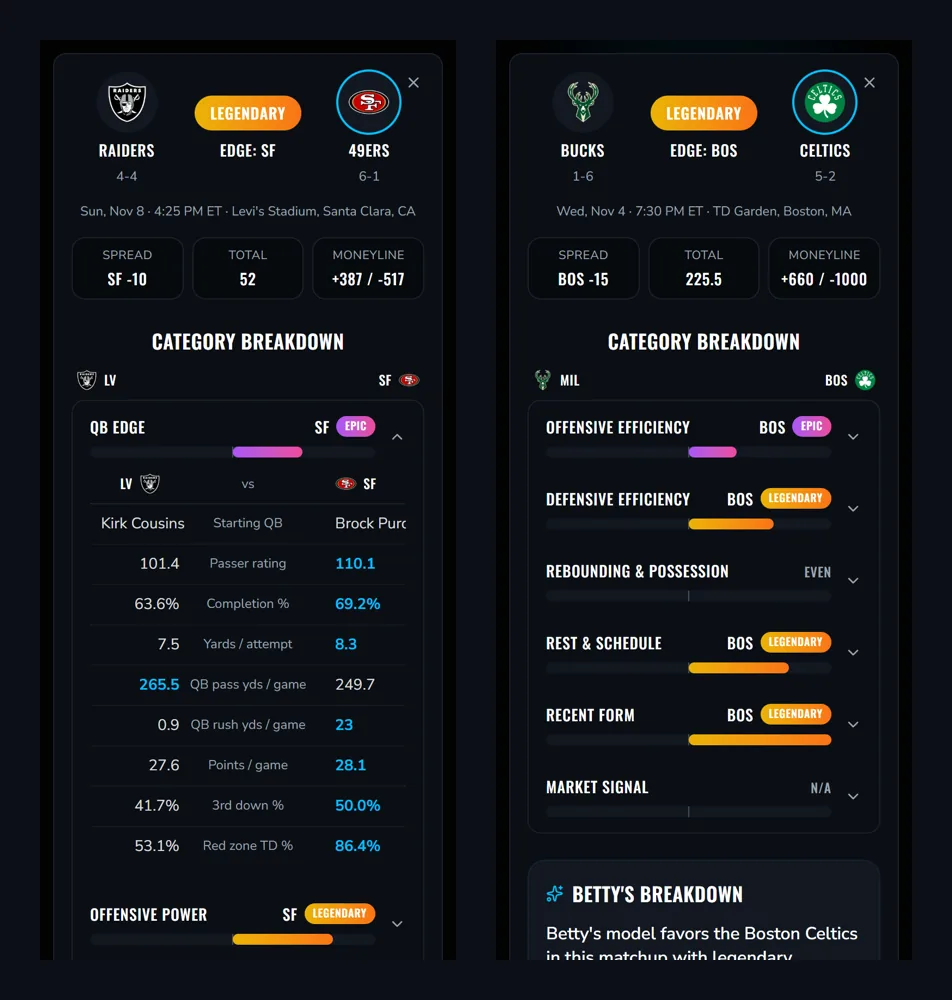
No. Betty rates how large the gap is between two sides, from Even to Legendary, and highlights the side the stats favor. A large gap describes the numbers. It does not decide the game. The rating tiers explained walks through what each label does and does not claim.
What should you ask any AI picks tool?
- Can I see the stats behind each call?
- When was the call recorded, and can it change?
- Is every call graded, including the losses?
- How many calls does any quoted number cover?
- Does it tell me what could make it wrong?
- Does it promise outcomes? If so, leave.
A longer version of this test is in the guide to choosing an AI betting tool.
Why does visible reasoning beat a headline number?
A percentage tells you about the past and nothing about tonight. Reasoning tells you what the tool is assuming right now, which you can check against news you have that it does not. If the breakdown says a quarterback's passing is the main edge and you know he is questionable, you have just found the weak point. That is the job of the AI-written breakdown in each matchup: a takeaway, three reasons, and what could flip it, citing only the stats. The mechanics are in how AI sports predictions work.
Why do wins and losses both belong in a record?
A record that shows only wins is an advertisement. A record that shows both is a measurement. What matters is that every call is included, that it was made before the game, and that the grading is applied the same way to all of them. When those conditions hold, a record can tell you something real over a long enough run, and when they do not, the headline figure tells you very little.
That is the purpose behind grading verdicts in public: it removes the option of choosing which results to show. Read the record as one more input, with the same caution you would apply to any other, and keep in mind that a long record says more than a short one.
What would convince you a tool is worth using?
Not a number, but a pattern: the reasoning holds up when you check it against things you know, the risks it names turn out to be real ones, and the record is open to inspection whether it flatters the product or not. A tool that survives those checks across several games has earned a place as one input in your process. One that fails them in the first week has told you everything you needed.
How do you keep expectations realistic?
Assume that no source, human or AI, is right most of the time in a way that is easy to exploit. Prices in the betting market already reflect a lot of information. The realistic goal of analysis is to understand a game better and notice where your own view might be off, not to find a sure route to profit.
How should you use AI analysis responsibly?
Treat it as one input. Compare it with your own read and any news it may not have, and decide how much, if anything, to risk. Keep the amounts small enough that a bad night does not matter. Betty does not accept wagers or tell you what to bet, and it is meant to inform, not to steer you.
If betting stops being fun or starts to cause problems, take a break and talk to someone. In the United States you can call 1-800-GAMBLER.
How can you judge Betty yourself?
Open a featured matchup on the Free plan, which unlocks one matchup per sport each week, and read the stats, the ratings and the breakdown. If the reasoning holds up, good. If it does not, you have lost nothing. Start free, or see how the plans compare on the pricing page.
Betty Sports is for information only. Betty does not accept wagers. You must be 21 or older. If you or someone you know has a gambling problem, call 1-800-GAMBLER.
Frequently asked questions
- Can AI predict sports games correctly?
- It can sometimes identify which side has the stronger numbers, but sports outcomes stay uncertain, so no AI can promise correct results. Judge a tool by its transparency and its public record rather than by a claim of certainty.
- Does Betty publish an accuracy percentage?
- This post does not quote one. Betty's verdicts lock at game time and are graded publicly, so you can inspect the record on the site. A single percentage can mislead because it depends on how and when it was measured.
- Why do some tools claim very high accuracy?
- Usually because of the way the figure is built: a short window, a narrow bet type, edited or late calls, or wins shown without losses. Ask how many calls the number covers and whether every call was recorded before the game.
- Is it safe to bet based on AI analysis?
- No analysis removes risk. Use it as one input, bet only what you can afford to lose, and if gambling stops being fun, call 1-800-GAMBLER. Betty is for adults 21 and over and does not accept wagers.