
How to Read Sports Betting Odds: Moneylines, Spreads, and Totals Explained
By Betty Sports · · 4 min read

Understanding sports betting odds is the first step to making smarter wagers. Whether you're betting NFL games, NBA matchups, MLB totals, or player props, learning how to read moneylines, point spreads, and over/under totals will help you find value in the betting markets and avoid common mistakes.
This guide breaks down the core bet types, explains how sportsbooks set odds, and shows you how to calculate payouts and implied probabilities like a professional bettor.
What Are Sports Betting Odds? (A Simple, Clear Definition)
Sports betting odds represent two things:
- The probability of an outcome (according to the sportsbook)
- The payout you receive if your bet wins
Most U.S. sportsbooks use American odds, which appear as positive or negative numbers such as +150, -120, or +2000.
Sportsbooks also include vig (juice) in the odds. This is the house edge that ensures the bookmaker makes a profit over time.
Understanding Moneyline Odds
What Moneyline Odds Mean
A moneyline bet is the simplest wager you can make: pick which team will win the game.
- Negative odds (-150): The team is the favorite
- Positive odds (+140): The team is the underdog
Example (NFL):
- 49ers -180 → Bet $180 to win $100
- Vikings +160 → Bet $100 to win $160
How to Calculate Your Payout
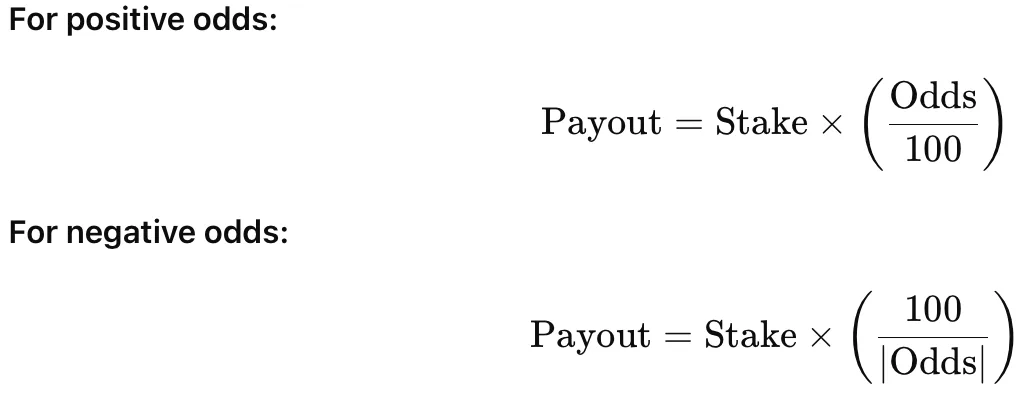
Example: A $100 bet at +150 returns $250 total ($150 profit + $100 stake).
When Moneylines Offer the Best Value
Moneylines can be the smarter choice when:
- You like an underdog with matchup edges
- The spread is small (like -1.5 or +1.5)
- Games tend to end in close scores (MLB, NHL)
How Point Spreads Work (And Why They Exist)
What a Spread Represents
A point spread evens the playing field between two teams by assigning a required margin of victory.
Example:
- Chiefs -6.5
- Bears +6.5
The favorite must win by 7 or more to cover the spread. The underdog covers by losing by 6 or fewer, or winning outright.
This is often called ATS (Against the Spread).
Spread Examples by Sport
NFL
Spreads commonly fall near key numbers like 3, 7, and 10 because so many games finish with those margins.
NBA
NBA spreads are more volatile due to pace and scoring swings (e.g., back-to-back games, rest disadvantage).
When Spreads Are the Better Play
Spreads make sense when:
- A favorite is too expensive on the moneyline
- A game projects to be close
- You expect the underdog to keep it competitive
What Are Totals (Over/Under) Bets?
A total (or over/under) is a bet on the combined final score of a game.
Example:
- Lakers vs. Warriors O/U 229.5
You don’t need to pick a winner; just whether the score goes Over 229.5 or Under 229.5.
How Totals Are Set
Sportsbooks consider:
- Pace of play (NBA)
- Offensive efficiency & defensive efficiency
- Weather (NFL, MLB; wind is huge in baseball)
- Pitching matchups (MLB)
- Goaltending strength (NHL)
Examples of Totals by Sport
- NFL: 41.5 in a defensive matchup, 54.5 for strong offenses
- NBA: 228.5–240.5 depending on pace
- MLB: 7.5 with elite pitchers, 10.5 at high-scoring ballparks
Converting Odds Into Implied Probability
Why Probability Matters More Than the Odds
Understanding the implied probability helps bettors identify value: spots where the sportsbook may have mispriced the betting line.
Implied Probability Formulas
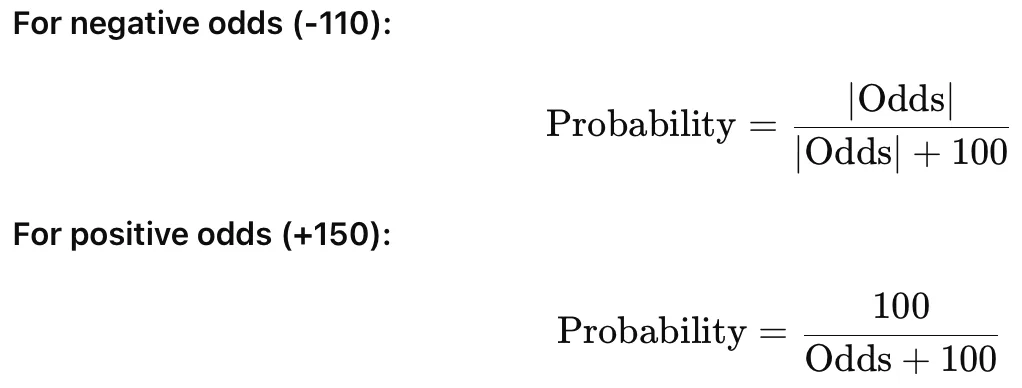
Examples
- -110 → 52.38%
- +200 → 33.33%
This helps you compare your expected game outcome to what the sportsbook believes.
How to Compare Moneylines, Spreads, and Totals
When Each Bet Type Offers Better Edge
| Bet Type | Best Use Cases |
|---|---|
| Moneyline | When you trust the team to win outright |
| Spread | When the game is competitive but the margin matters |
| Total | When you trust pace, scoring environment, or pitching more than either team |
Common Mistakes Bettors Make
- Ignoring line movement
- Misreading key numbers
- Overbetting favorites
- Betting overs based on recent scoring instead of pace/efficiency
- Not converting odds to implied probability before placing a wager
Avoiding these errors helps build more consistent, disciplined betting habits.
Conclusion: Turn Your Odds Knowledge Into Action and Let Betty Do the Hard Work
Mastering how to read odds is a major step toward betting smarter. Understanding moneylines, spreads, and totals gives you the foundation to recognize value, compare betting markets, and make informed decisions. But evaluating every matchup, tracking trends, and identifying real edges across multiple sports can be time-consuming, even for experienced bettors.
That’s exactly why Betty Sports exists. Betty scores every matchup across six statistical categories, compares the two sides, and highlights which team has the statistical edge, so you don’t have to do all the heavy lifting yourself. The result is clear, data-driven insights that help you bet with confidence instead of guesswork.
If you're ready to simplify your research and make sharper decisions, take the next step: unlock smarter betting insights with an AI sports betting tool like Betty.
Smarter insights lead to smarter bets. Betty helps you get there faster.
Frequently Asked Questions
What does -110 mean in betting?
Odds of -110 mean you must risk $110 to win $100. This pricing is standard for point spreads and totals because it includes the sportsbook’s built-in fee (often called the vig or juice) that ensures the book profits regardless of the outcome.
Is a moneyline easier to understand than a spread?
Yes. A moneyline bet is simpler because you only need your team to win the game outright. A spread requires your team to win by a certain margin (or not lose by more than a set number), making moneylines more intuitive for beginners.
Why do odds move before the game starts?
Odds shift due to several influential factors, including:
- Injury news or lineup changes
- Sharp bettors placing large wagers
- Public betting percentages creating imbalance
- Weather conditions impacting performance
These adjustments help sportsbooks manage risk and reflect the most accurate, real-time expectations of a matchup.
What is implied probability?
Implied probability converts betting odds into the percentage chance the sportsbook believes an outcome will occur. It helps you evaluate whether a bet has value by comparing the sportsbook’s estimate to your own predictions or model.
Are spreads or moneylines better for beginners?
Moneylines are typically better for new bettors because they’re straightforward: just pick who wins. However, spreads often offer better long-term value since they reduce vig in some markets and provide more balanced pricing across both sides of a game.